Canada's labour market delivered its best surprise of the year in July, adding 75,000 jobs against expectations of roughly 15,000. The unemployment rate slipped a tenth of a point to 6.4%, its third straight monthly decline and the lowest reading since July 2024.
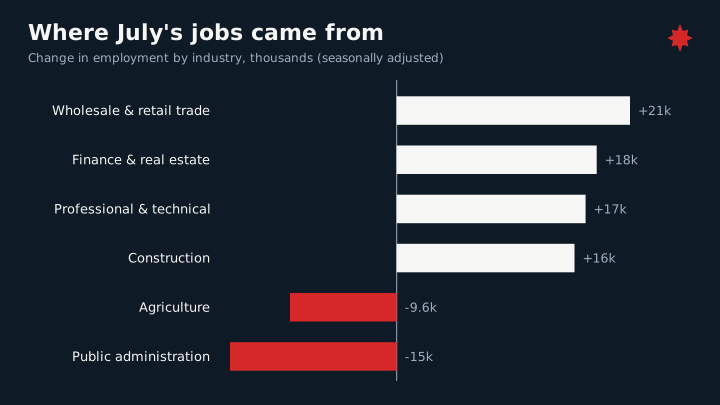
The gains were split fairly evenly between full-time and part-time work, and they were broad across industries. Wholesale and retail trade added about 21,000 positions, finance and real estate 18,000, professional and technical services 17,000 and construction 16,000. Ontario accounted for 52,000 of the national increase, its strongest month in years, with British Columbia adding a further 18,000.
Two sectors moved the other way. Public administration cut 15,000 jobs and agriculture lost close to 10,000. Over the past four months the public sector has been shrinking while private employers and the self-employed have carried the recovery: since April, private payrolls are up 146,000 and self-employment has risen 73,000.
The trend still looks like stabilization from last year's softness rather than a true acceleration.
There were softer notes beneath the headline. Wage growth cooled to 2.8% year over year from 3.3% in June, which is welcome news for inflation but less so for household budgets. Youth unemployment remains far above the national average, and the gap for Black youth in particular barely moved from a year earlier. Economists at Indeed and elsewhere characterized the report as evidence the market has found a floor rather than a launchpad.
The timing adds a layer of unease. The survey landed less than two weeks before the deadline for a new round of 50% U.S. tariffs on selected Canadian exports. Employers in the targeted industries were already holding off on hiring decisions, and the collapse of trade talks later in the month means August's report will be read closely for any early damage.