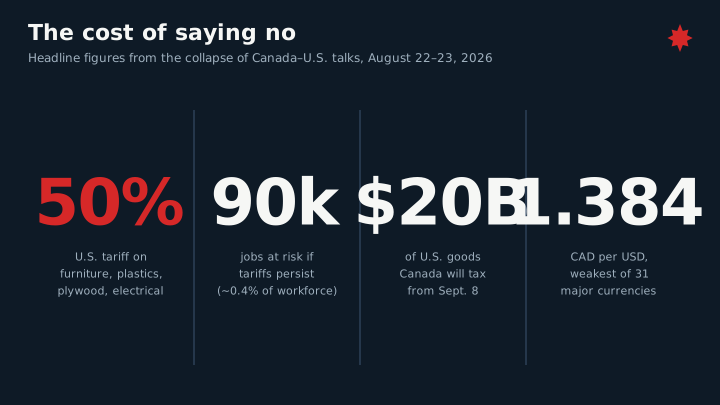
Trade talks between Canada and the United States broke down late on Friday, and by Saturday morning a 50% U.S. tariff was in force on hundreds of Canadian products, among them furniture, plastics, plywood, electrical equipment, honey and alcohol. The rate is high enough to price some smaller exporters out of their largest market entirely.
Prime Minister Mark Carney did not pretend the decision would be painless. Speaking for close to an hour in Ottawa less than twelve hours after negotiations ended, he framed the situation as a fight Canada had not picked but would not shrink from, and announced counter-tariffs on about $20 billion of U.S. steel, dairy, appliances, electronics and other goods, effective September 8.
The public appears to be with him. An Angus Reid poll taken after the collapse found three in four Canadians support walking away. But the same survey captured the anxiety underneath: 38% of working respondents fear for their own job, and 89% expect the cost of living to get worse.
Economists say the uncertainty could do more damage than the tariffs themselves.
The targeted goods represent roughly 5% of Canada's exports to the U.S., which is why most forecasters do not expect a national recession. But the sectoral concentration is severe. University of Calgary economist Trevor Tombe estimates around 90,000 jobs, about 0.4% of the labour force, could disappear if the duties stay in place, with the hit falling hardest on British Columbia, Ontario and Quebec. Furniture and textile makers have nearly half their U.S. sales covered by the new rate.
Markets moved quickly. The Canadian dollar fell as much as 0.6% to 1.384 per U.S. dollar on Monday, the worst performer among major currencies, erasing the previous week's rally that had been built on hopes of a deal. Washington, for its part, has threatened to answer any retaliation with further escalation, including a possible move to 50% tariffs on autos and auto parts from the start of 2027. Former trade minister Mary Ng described the breakdown as a permanent shift in the American posture rather than a negotiating tactic.