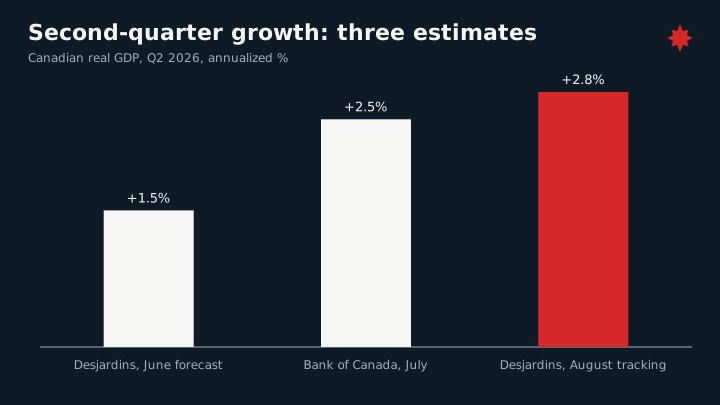
A lot has changed since Desjardins published its last full Canadian forecast in June. After two consecutive quarterly declines in real GDP, data through the second quarter have pointed to a sharp rebound, and the group's economists are now tracking annualized growth of 2.8%, nearly double their earlier 1.5% call and a touch above the Bank of Canada's July projection.
They expect the third quarter to hold up as well. Increased federal income transfers in June and July likely lifted consumer spending, and Ottawa's steady stream of new spending announcements should provide a further tailwind. The offset is business investment, which may prove weaker than hoped as renewed U.S. tariff threats serve as a reminder that trade tensions are far from resolved. The outlook was published before the August 22 collapse of talks, and the authors flagged that their tariff assumptions would be updated as measures were confirmed.
Given more pronounced signs of recovery, Desjardins has brought forward its call for the next Bank of Canada hike to the first quarter of 2027.
On monetary policy, the group still expects only a modest dose of tightening in total. South of the border, it sees the Federal Reserve on hold until a single cut later in 2027. Long-term bond yields should fall modestly but remain elevated given heavy global debt issuance. North American equities have kept rallying on record earnings, prompting Desjardins to lift its year-end targets, and with the U.S. dollar expected to keep weakening, the loonie is forecast to end 2026 around 1.38.
The global backdrop is uneasy. Oil has hovered near US$80 since mid-July as traffic through the Strait of Hormuz runs at roughly half pre-conflict levels, and the market is leaning on inventory drawdowns and softer demand. The U.S. economy slowed to 1.5% annualized growth in the second quarter, though mostly on inventories and imports rather than domestic demand.
For Quebec, the picture is subdued: growth of 0.4% in 2026 and 1.4% in 2027, with limited job creation cushioned by a shrinking working-age population. The main risk to every scenario remains the conflict with Iran and the possibility it widens, which could push energy prices well above the central assumption and force central banks to tighten into a slowdown.