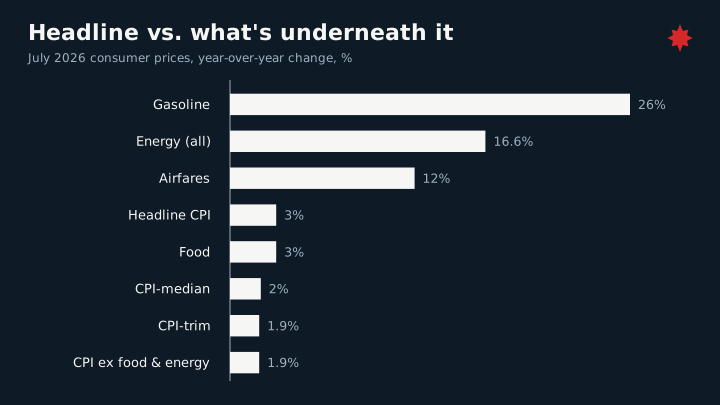
Canada's consumer price index rose 3% in July from a year earlier, up from 2.8% in June, as gasoline prices climbed again on renewed disruption to shipping through the Strait of Hormuz. Pump prices averaged 26% above their level of a year ago, up from a 20% annual gain in June, and overall energy costs were 16.6% higher.
Beneath that, price pressures look far calmer. CPI excluding food and energy edged up to 1.9% from 1.8%. The Bank of Canada's two preferred core gauges, CPI-trim at 1.9% and CPI-median at 2.0%, averaged exactly 2% — essentially unchanged from June and right at the target. On a three-month annualized basis the same average was 2%, up from 1.7%.
Food inflation eased to 3% from 3.5%, with grocery prices slowing to 3.1% from 3.9%, though restaurant prices crept higher. Airfares, one of the clearest channels for fuel costs to reach consumers, were 12% above a year earlier, and travel services rose 11% with some help from World Cup demand.
Higher energy costs could still pass through supply chains with a lag, but July showed no meaningful broadening.
The breadth measures RBC's economists watch were flat: roughly 32% of the CPI basket was growing faster than 3% over the past three months, and 24% faster than 5%, both in line with recent trends. That is the key point for monetary policy. The Bank has said it will look through the direct effect of oil on headline inflation so long as it does not spread, and July's data support that stance.
RBC continues to expect the overnight rate to stay at 2.25% for the rest of 2026. The bank's economists acknowledged the pending U.S. tariff deadline as a source of uncertainty, but argued that the narrow coverage of the proposed measures, with most exports still shielded by CUSMA exemptions, makes them unlikely to derail the broader recovery.